Seams
Weld Gaps at Laps
Cold welds pass a quick look but peel under a probe. Water then tracks along the lap and shows up inside well away from the opening.

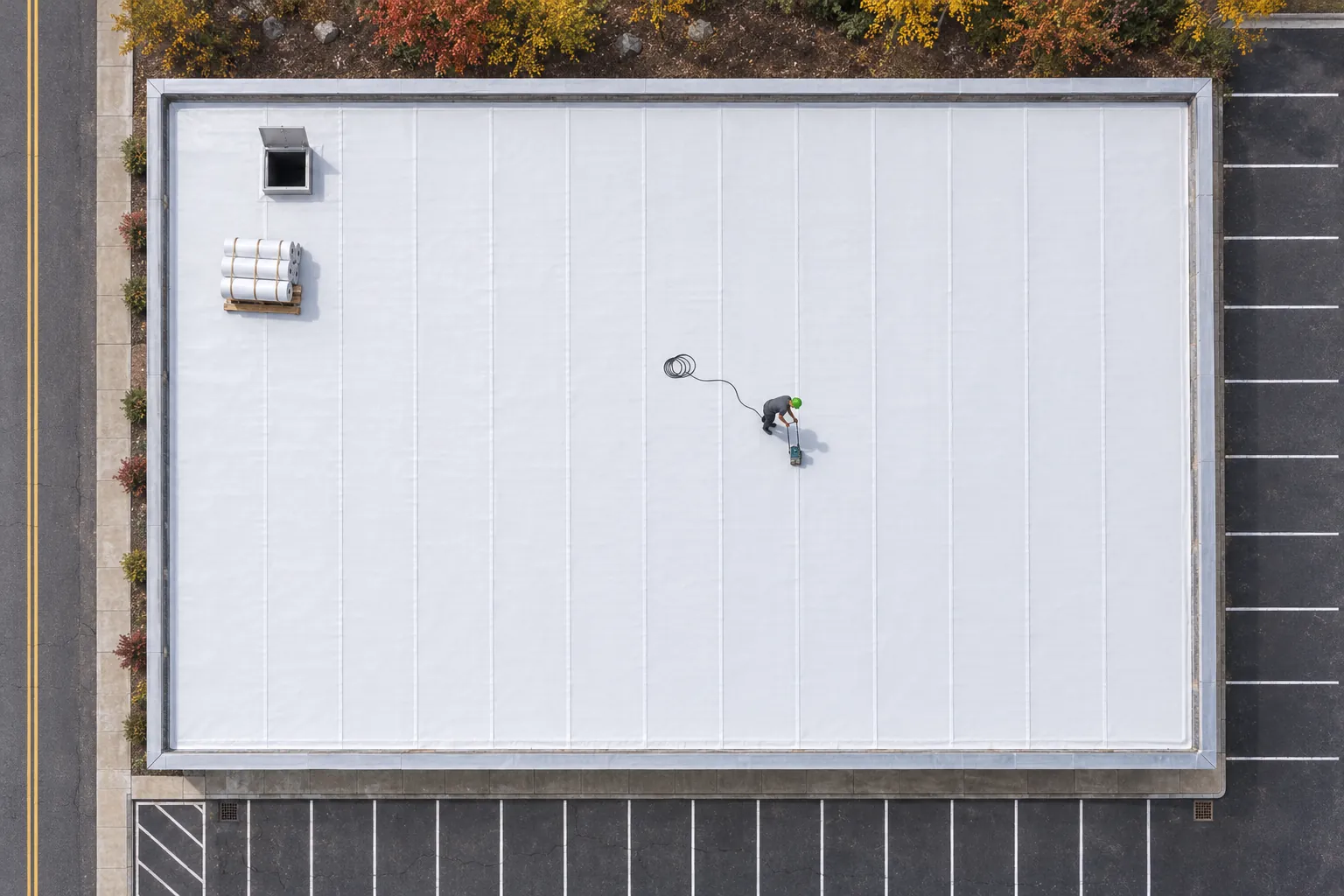
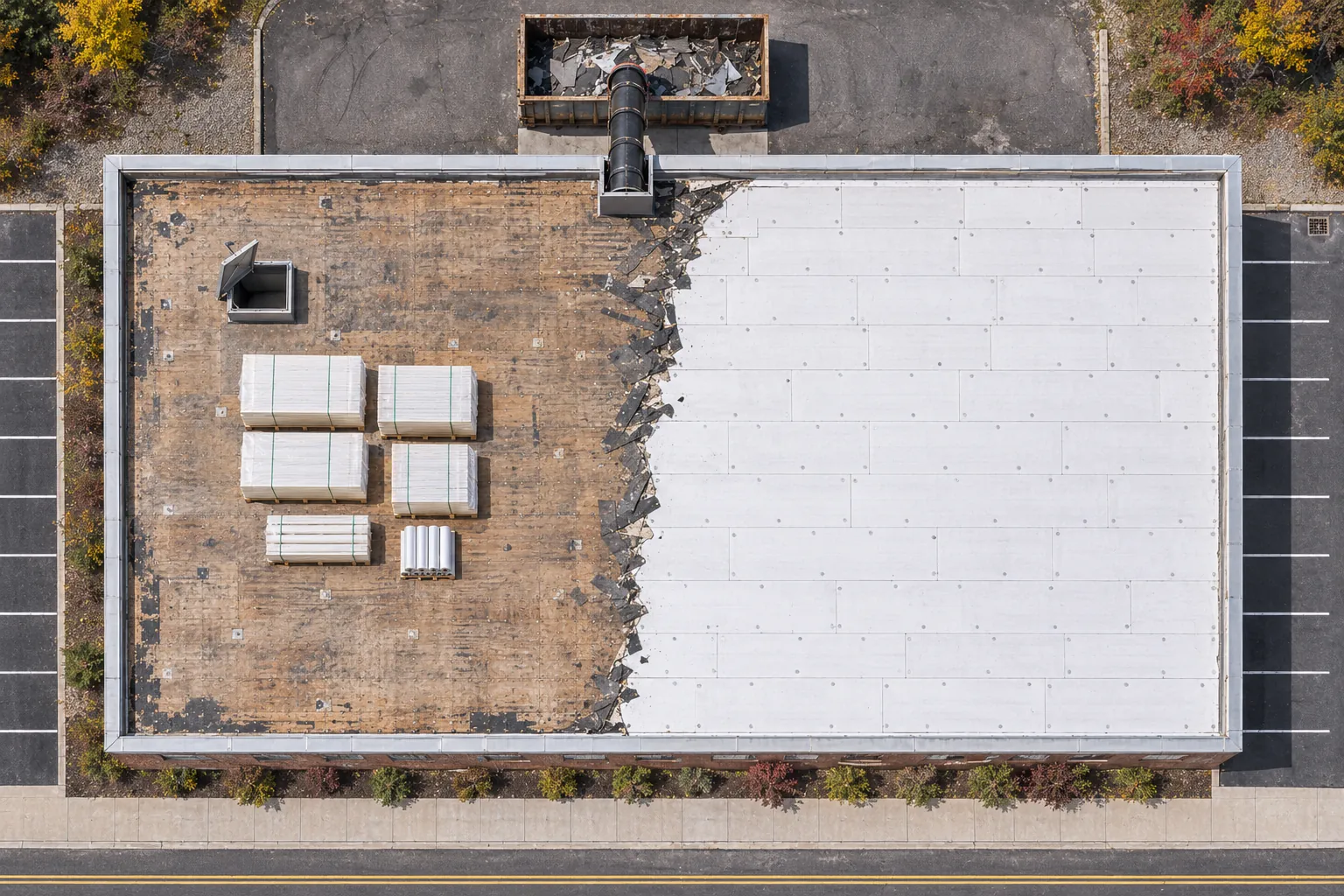
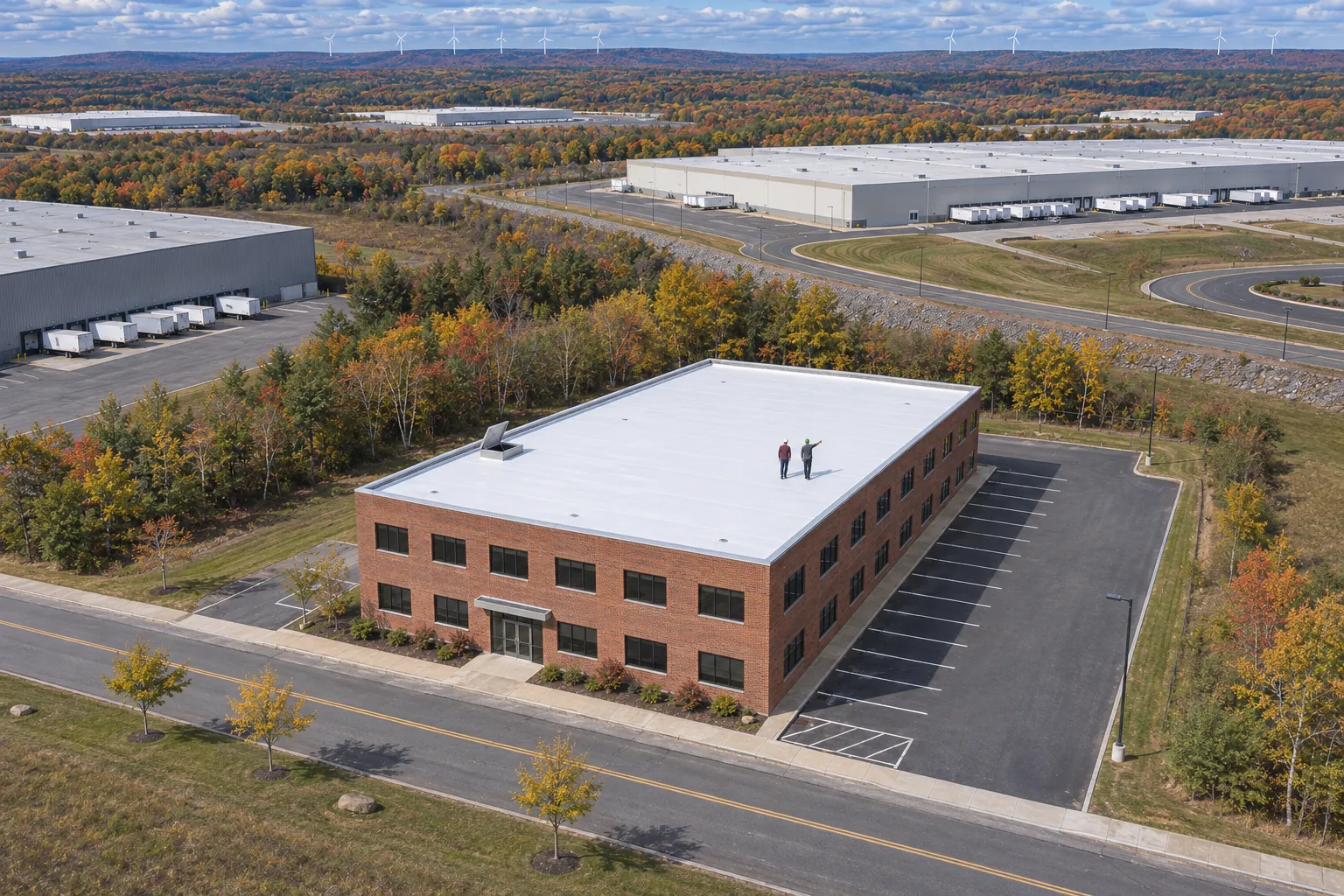
As a Hazleton TPO roofing contractor, we install white TPO membrane with welded seams over new insulation on distribution centers, plants, and office buildings.
Hazleton TPO roofing fits best on low-slope decks that can take new insulation. The grid shows where TPO works and where prep or another system comes first.
| Your Roof | TPO Over The Old Roof | TPO After Tear-Off | Another System First |
|---|---|---|---|
| Low-slope steel or concrete deck in good shape | Usually fits | Usually fits | Rarely |
| Wet insulation found in core cuts | Rarely | Usually fits | Rarely |
| Crowded curbs with little working room | Sometimes | Sometimes | Sometimes |
| Water sitting at the same low spots | Sometimes | Usually fits | Rarely |
| Old ribbed metal roof on a steel shop | Sometimes | Rarely | Usually fits |
Tapered insulation set during a tear-off corrects most low spots before the membrane goes on.
These conditions lead owners to replace an old roof with TPO, along with the TPO trouble we find when one went on poorly.
Cold welds pass a quick look but peel under a probe. Water then tracks along the lap and shows up inside well away from the opening.
Tool drops and loose parts around service points puncture the sheet. Protected walk routes and sturdy curb flashing cut down that damage.
Water that stays for days near drains strains laps and edges through every freeze. Tapered board sends it to the outlets instead.
An aging built-up or rubber roof with wet board underneath feels soft underfoot. That board comes out before the TPO goes down.
TPO roofs differ in attachment, seam work, and what sits under the sheet. We choose each from the deck and how the building is used.
Robotic and hand welders fuse each lap with hot air. We probe every seam, including curb corners and short runs where hand welding takes over.
Plates and screws hold the sheet along its laps into a steel deck. This attachment fits large warehouse roofs and keeps adhesive work off cold days.
Bonding the sheet to cover board gives a smooth surface with no fastener rows, which helps where wind uplift or foot traffic runs high.
Sloped board pushes water toward drains on flat decks. It also raises curb and edge heights, so those details are planned with it.
A TPO roof changes daily work on the roof and in the rooms under it.
Call and tell us where the leak shows inside. We will check the welds, the curb flashing, and the drain closest to that spot.
Six steps take a TPO roof from the first walk to a welded closeout.
Core cuts at low spots and around curbs show whether the old insulation is dry. We also measure curb heights against the thickness of the new assembly.
Wet board and failed membrane come off section by section. Where a recover is planned, loose areas get fastened down and wet spots are cut out first.
Flat or tapered board is fastened or adhered to the deck, then cover board goes on to give the TPO a firm, even base to bond or fasten to.
Sheets are rolled out, attached, and welded at every lap. Each seam gets probed, with extra checks at corners and where welds start and stop.
Rooftop unit curbs, pipes, drains, and edge metal get TPO flashing welded to the field sheet. A final walk checks every detail before we pack up.
You get a short upkeep list: clear drains each fall, keep service traffic on the walkway pads, and have seams near busy curbs checked once a year.
Some buildings call for rubber membrane or steel panels. These are the other systems we install around Hazleton.
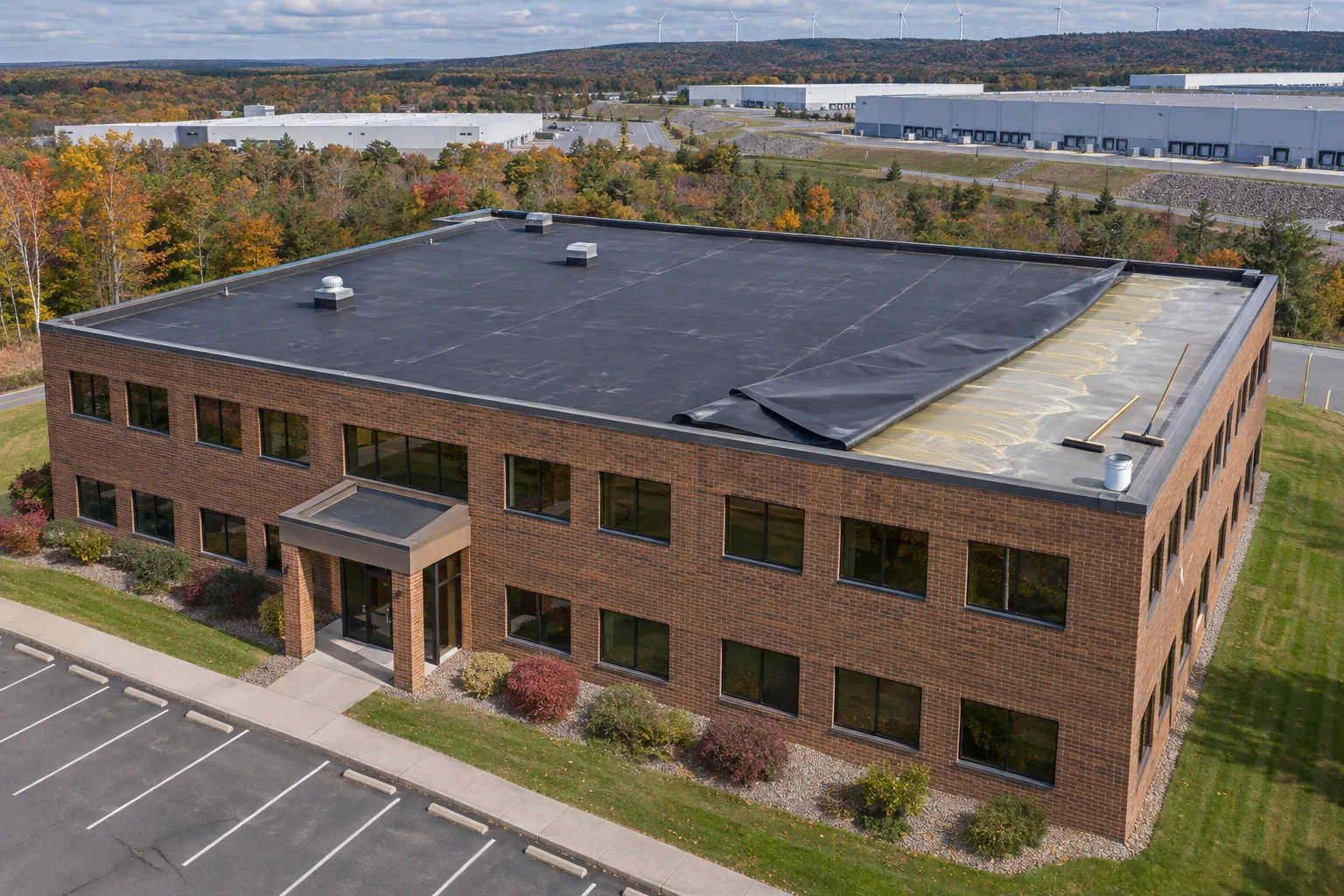
Black rubber sheet with taped seams, a common pick for brick buildings where flexible membrane and simple field repairs count most.
EPDM Roofing in Hazleton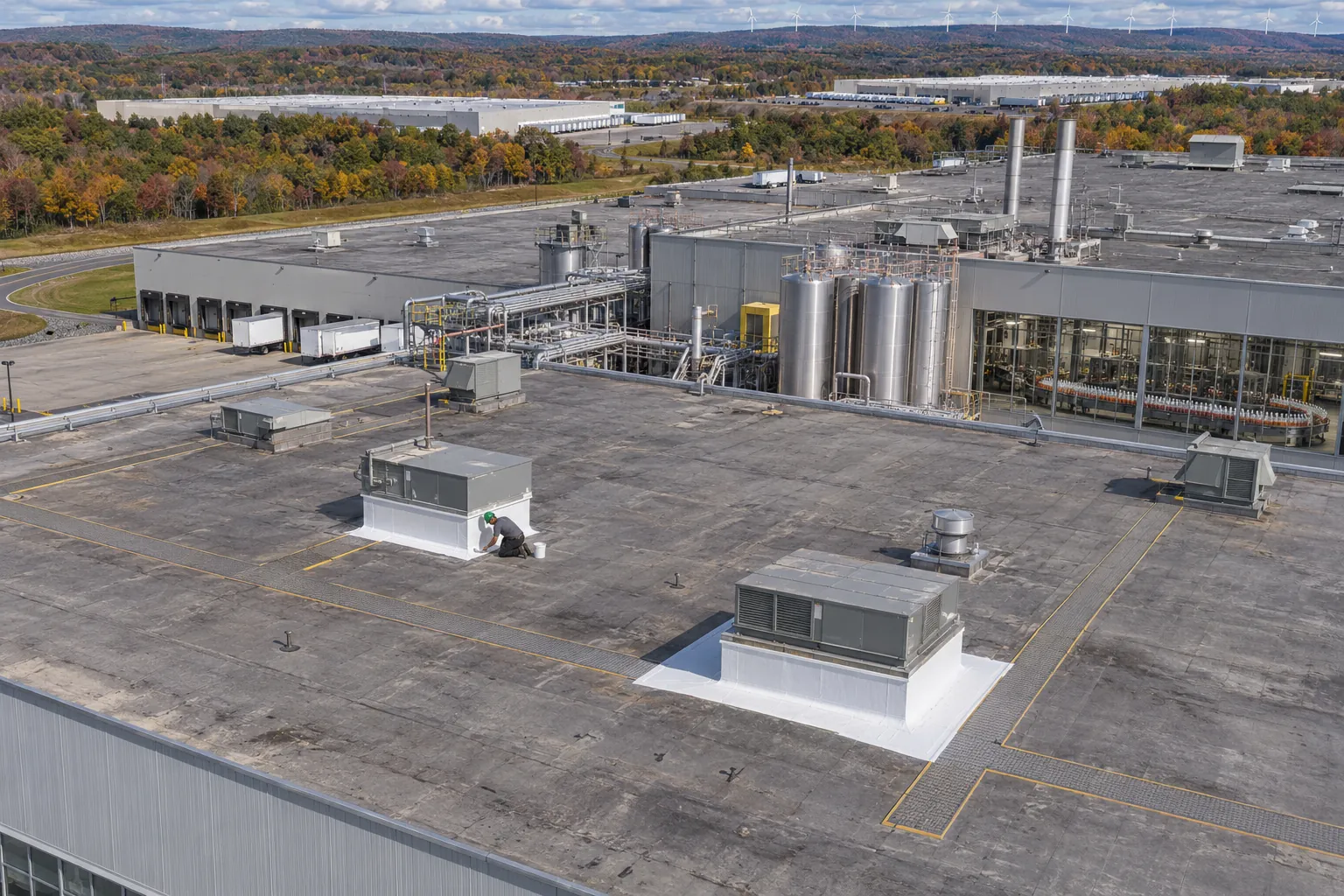
Assemblies for plant roofs with exhaust stacks, heavy units, and daily maintenance traffic, built around curb and access details.
Industrial Roofing in Hazleton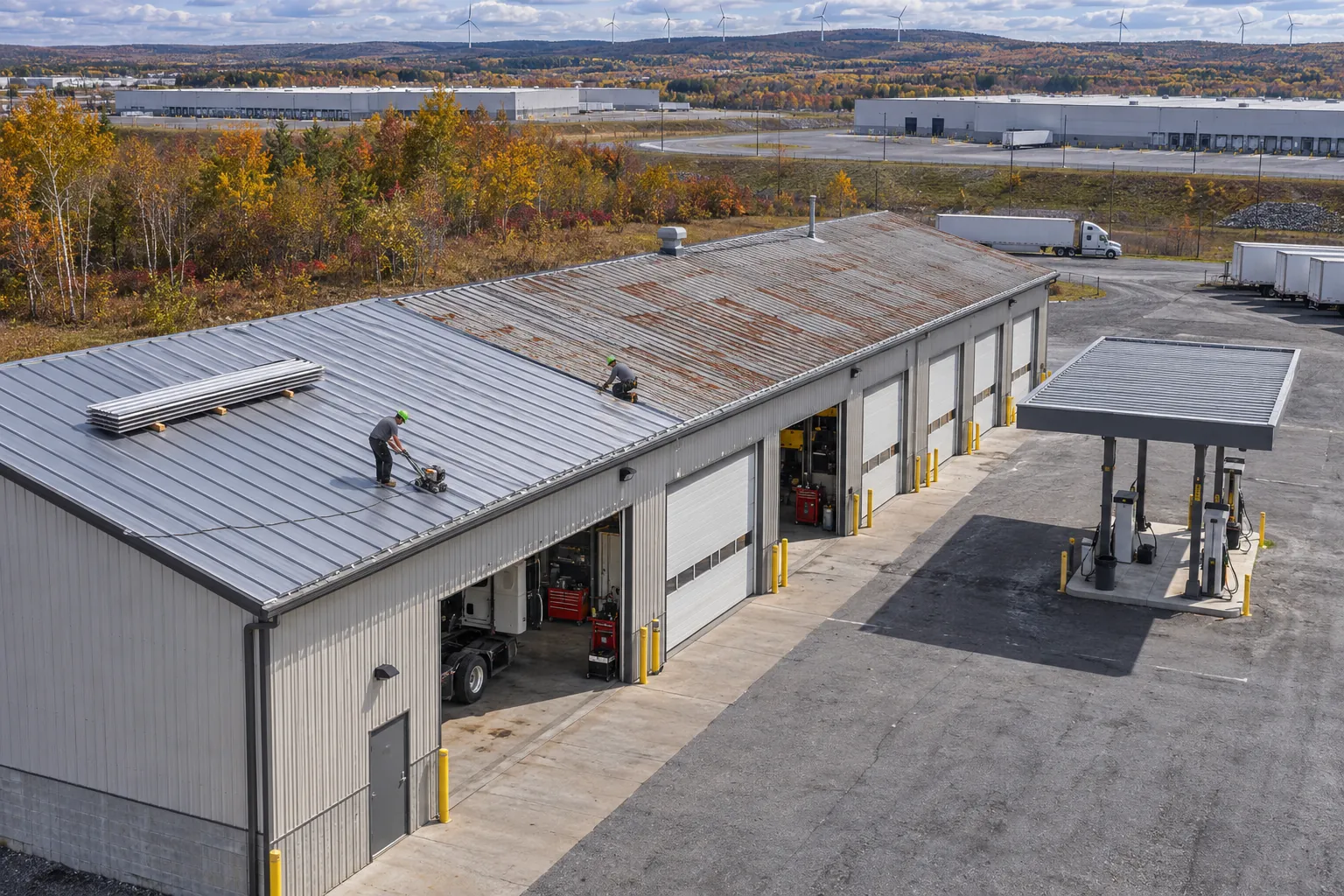
Steel panels for shops and pole buildings, installed new or over an existing ribbed roof after a framing check.
Commercial Metal Roofing in HazletonSeams, traffic, lifespan, and how TPO compares at crowded details.
Question about your own roof?
Call UsMembrane thickness, weld quality, drainage, traffic, and upkeep decide how long TPO lasts, so we plan around those rather than a fixed number. Roofs that drain well and get a yearly seam check hold up far longer than ones left with ponding and open laps.
It is safer to plan around inspections than a retirement date. Exhaust from plant vents, equipment traffic, and the thickness chosen all affect wear, so the plan focuses on access routes, vent detailing, and the seam checks that keep a plant roof dry.
Punctures and repeated disturbance around flashing show up most. Dropped tools and parts cut the sheet, and service work loosens curb details, so we lay protected routes to service points and check how equipment supports meet the membrane.
TPO flashing is welded, while EPDM flashing relies on tapes and adhesives, and each needs working room. Where pipes and curbs sit too close for either, moving access or redesigning the flashing does more good than switching membranes.
A clean-looking edge proves little about the bond beneath it. We probe welds along the full run and look hardest at curb corners, starts, and stops, where surface cleanliness and welder heat are toughest to control.
The white surface mainly cuts summer heat gain on offices and stored product. Winter comfort comes from the insulation under the sheet, which is why we size and replace that board during the same job instead of treating it as an extra.
Send the roof size and what you see inside, or call. We will inspect the seams, insulation, and curbs and price a TPO roof for your building.