Seams
Long Runs of Tired Laps
Big open roofs carry hundreds of feet of seam, and one weak lap can wet a wide strip of insulation before stock gets damp.
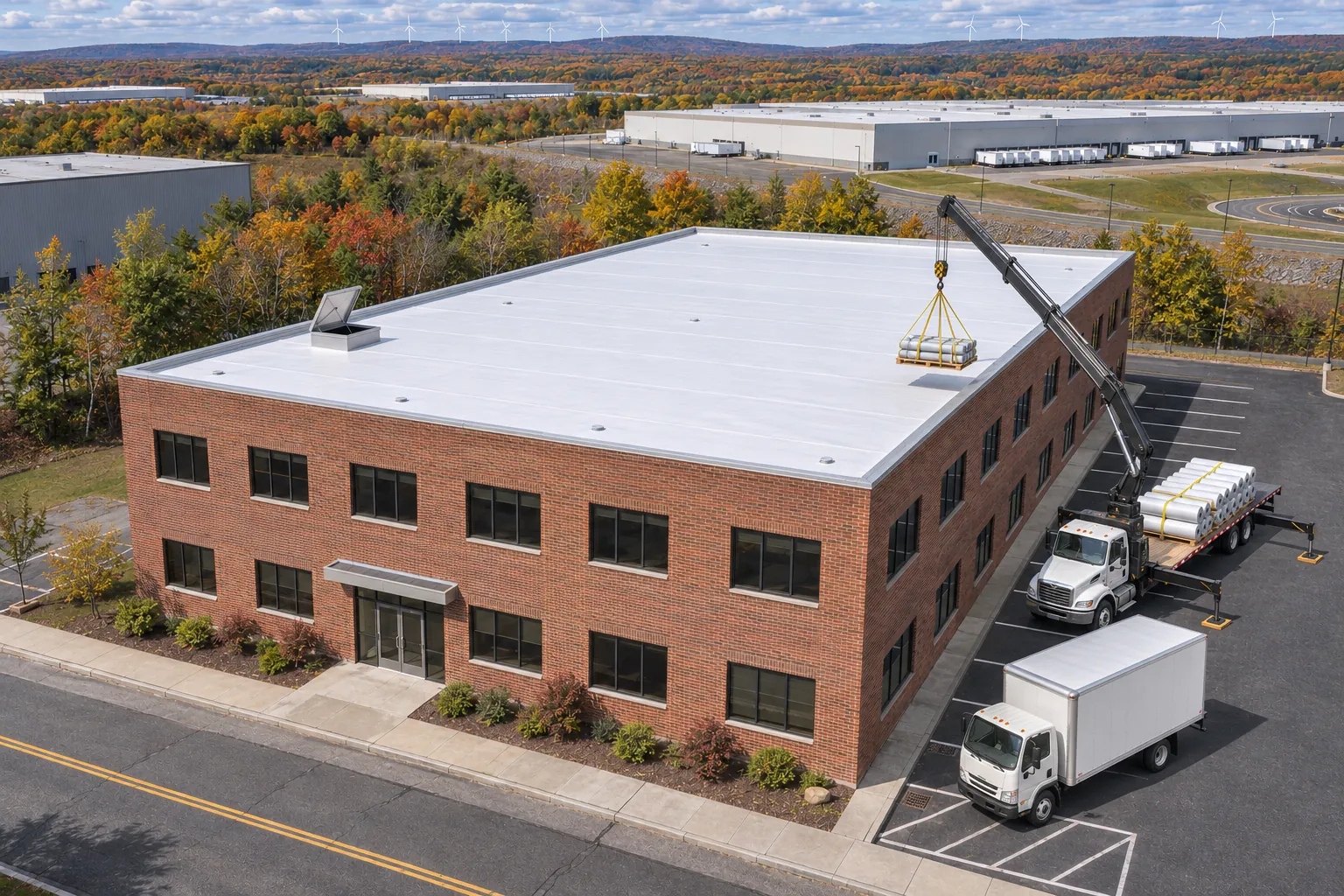
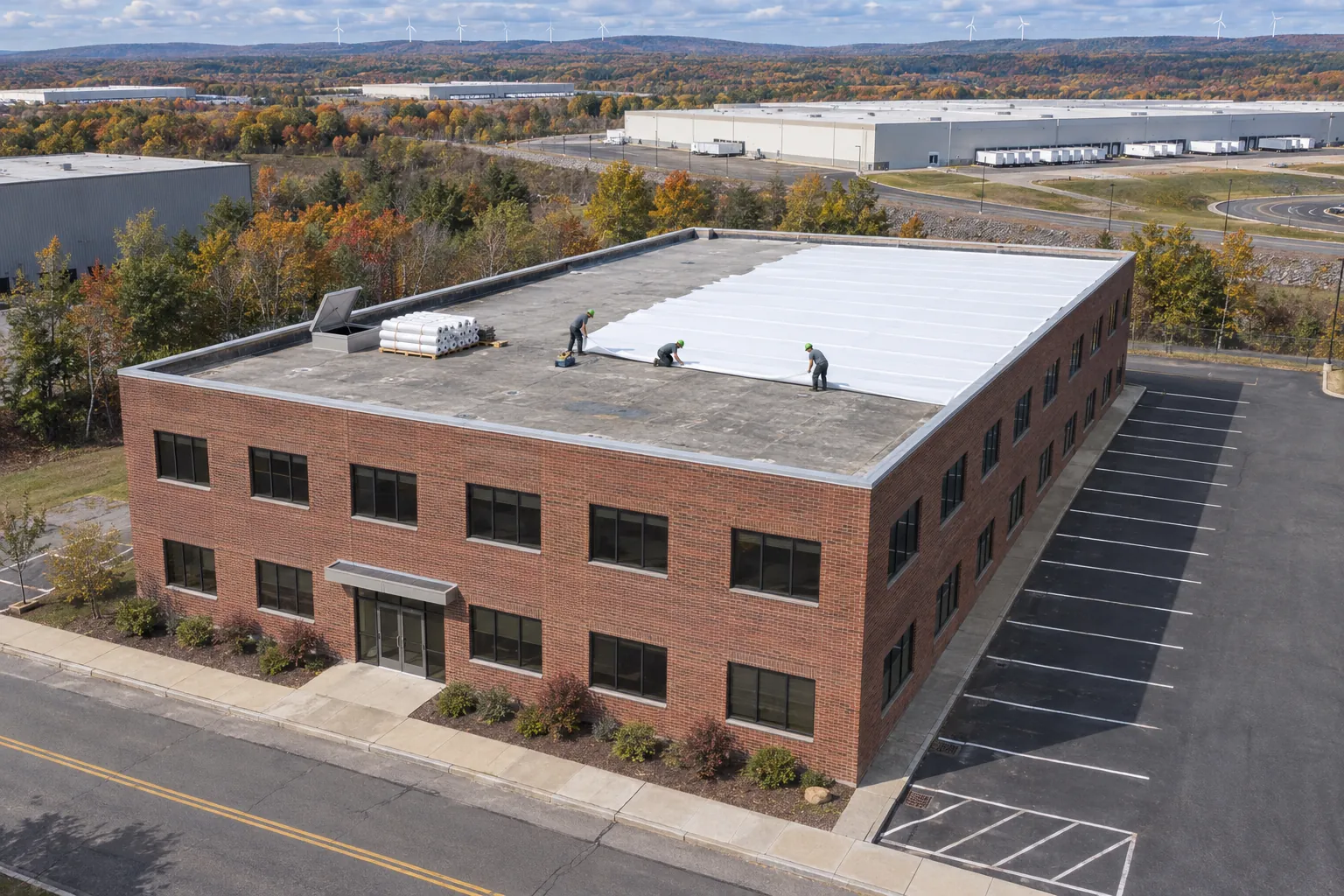
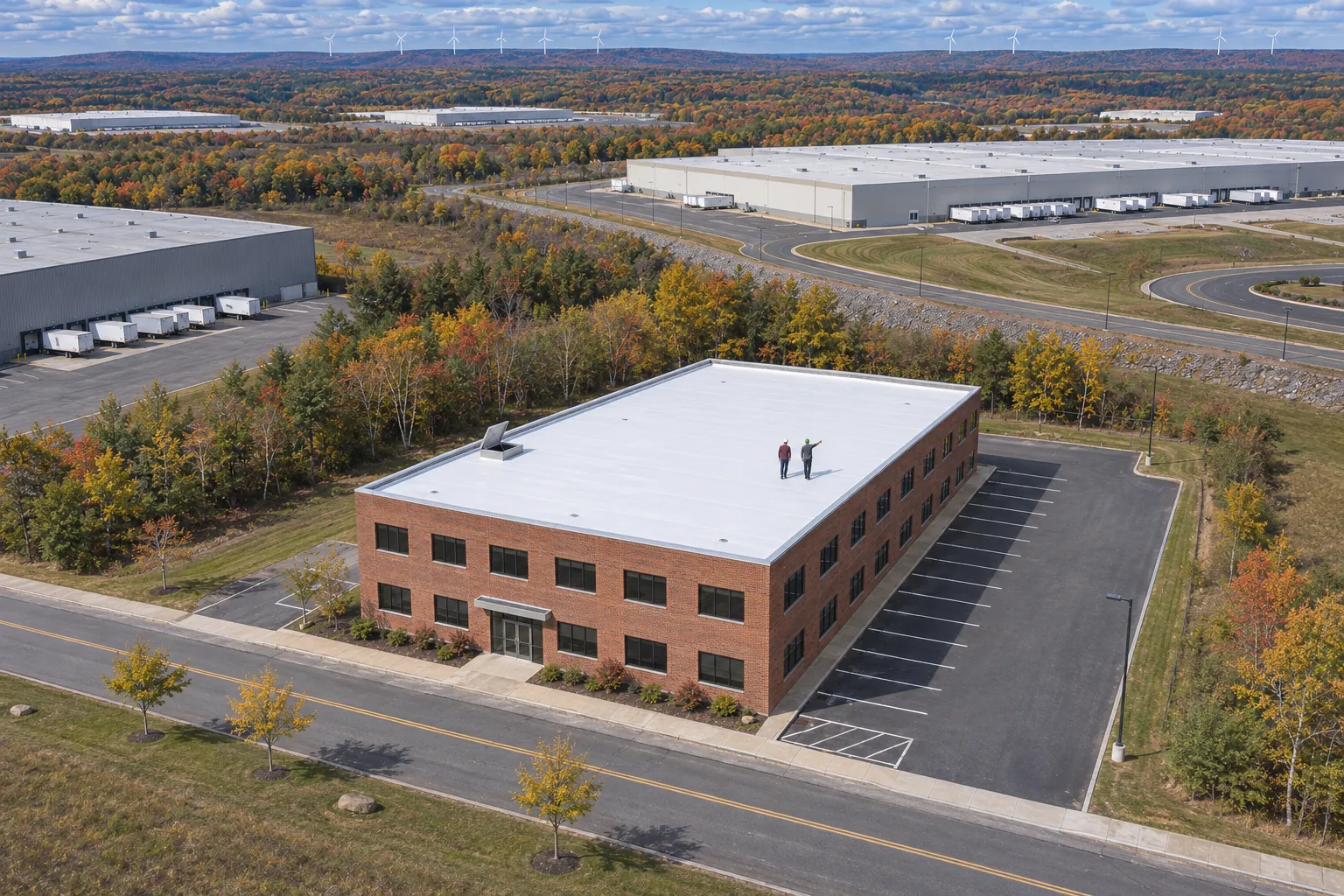
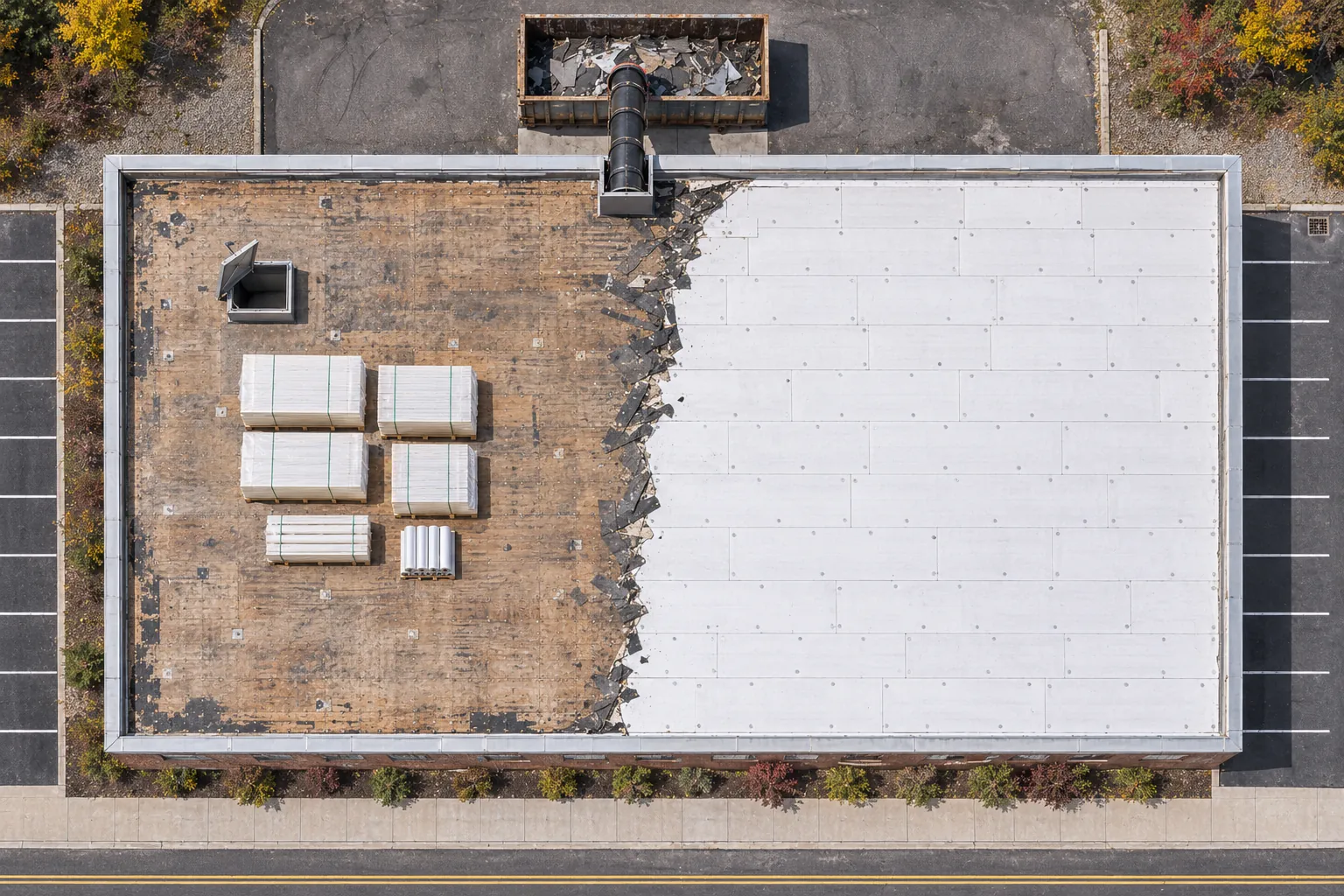
As a Bloomsburg commercial roofing contractor, we replace distribution and warehouse roofs in planned sections so trucks keep moving through the docks you choose.
Bloomsburg commercial roofing on a distribution building starts with the dock schedule. Roof access and material lifts are mapped so trucks never back in under active work.
We lay the dock calendar over the roof plan and pick which doors stay open each week. Staging, hoists, and dumpsters go on the side of the building with the least traffic.
Clear exclusion zones are marked below every open roof edge. If the crew moves to a new section, the dock lead hears about it the evening before, so a change on the roof never surprises a driver.
Large warehouse roofs fail in ways that are hard to see from the floor. These four turn up on most of the buildings we walk.
Big open roofs carry hundreds of feet of seam, and one weak lap can wet a wide strip of insulation before stock gets damp.
Leaves and grit block drains in the middle of the field, so meltwater spreads across the membrane instead of leaving the roof.
Leaks over tall racks drip onto product long before anyone sees a stain, and the board around them stays wet for months.
Wind lifts edge metal along the dock side first, and the membrane under it starts to flap and tear at the corners.
Fans and vents above busy docks get bumped during service, and their curb flashing splits at the corners first.
Drifts pile up where a high bay meets a lower office roof, loading that edge and forcing melt under the flashing.
On a busy distribution roof, the right plan matters to the owner, the shipping desk, and the warehouse crew.
Each system below fits a different part of a warehouse roof. The inspection decides which one goes where.
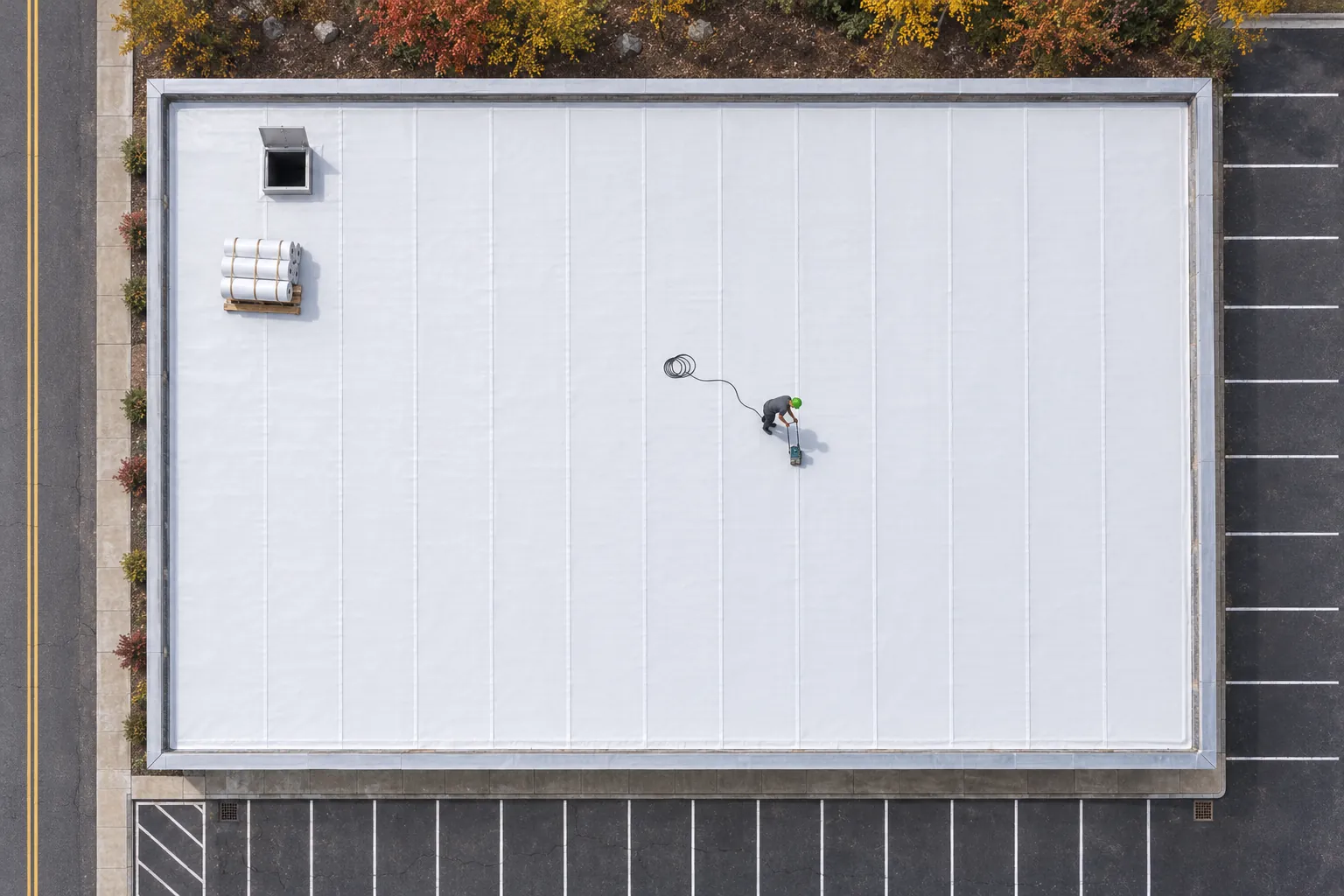
Welded white membrane that covers wide warehouse fields quickly and keeps the space under it cooler in summer.
TPO Roofing in Hazleton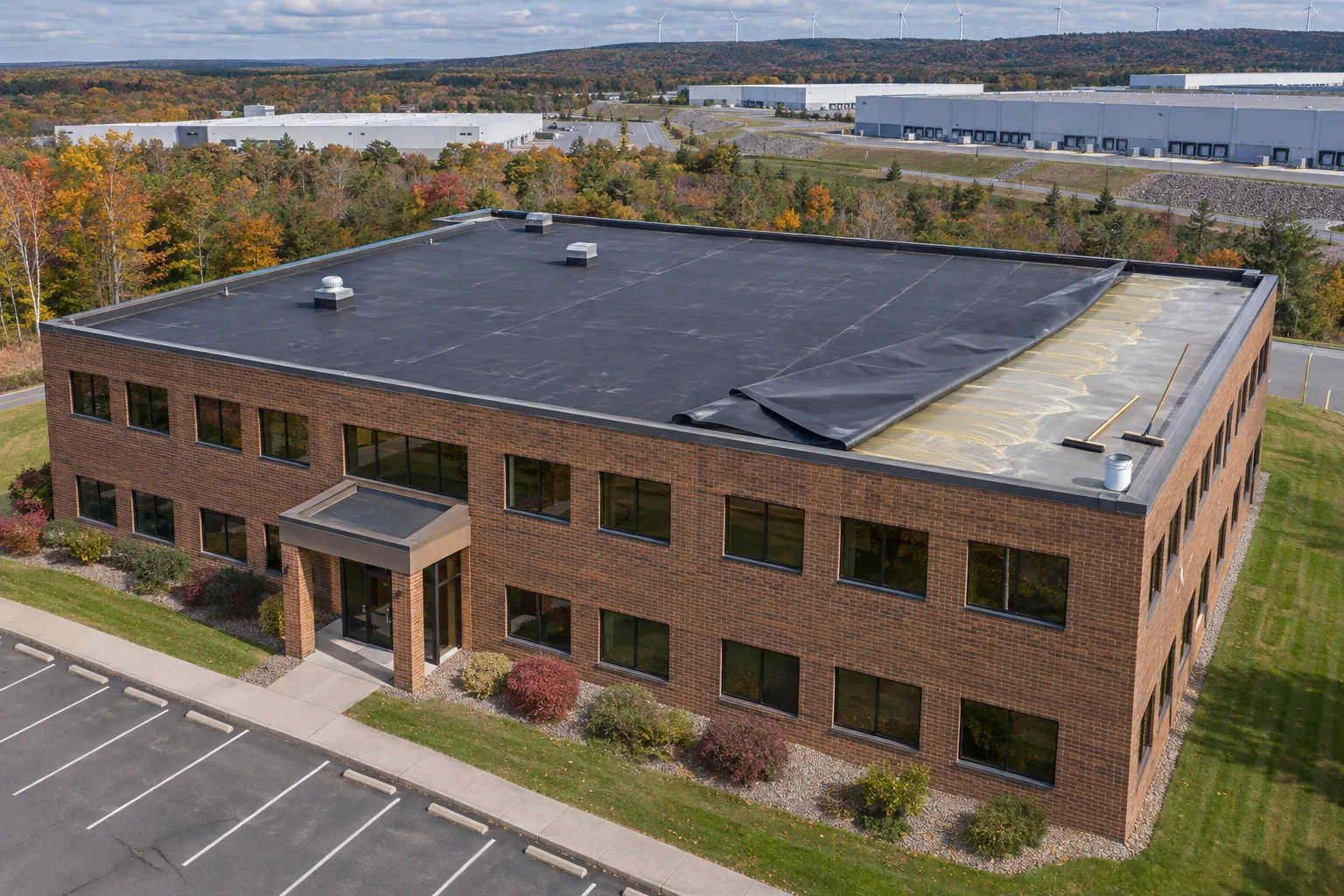
Rubber sheets for older brick warehouse sections where flexible membrane meets tall parapet walls.
EPDM Roofing in Hazleton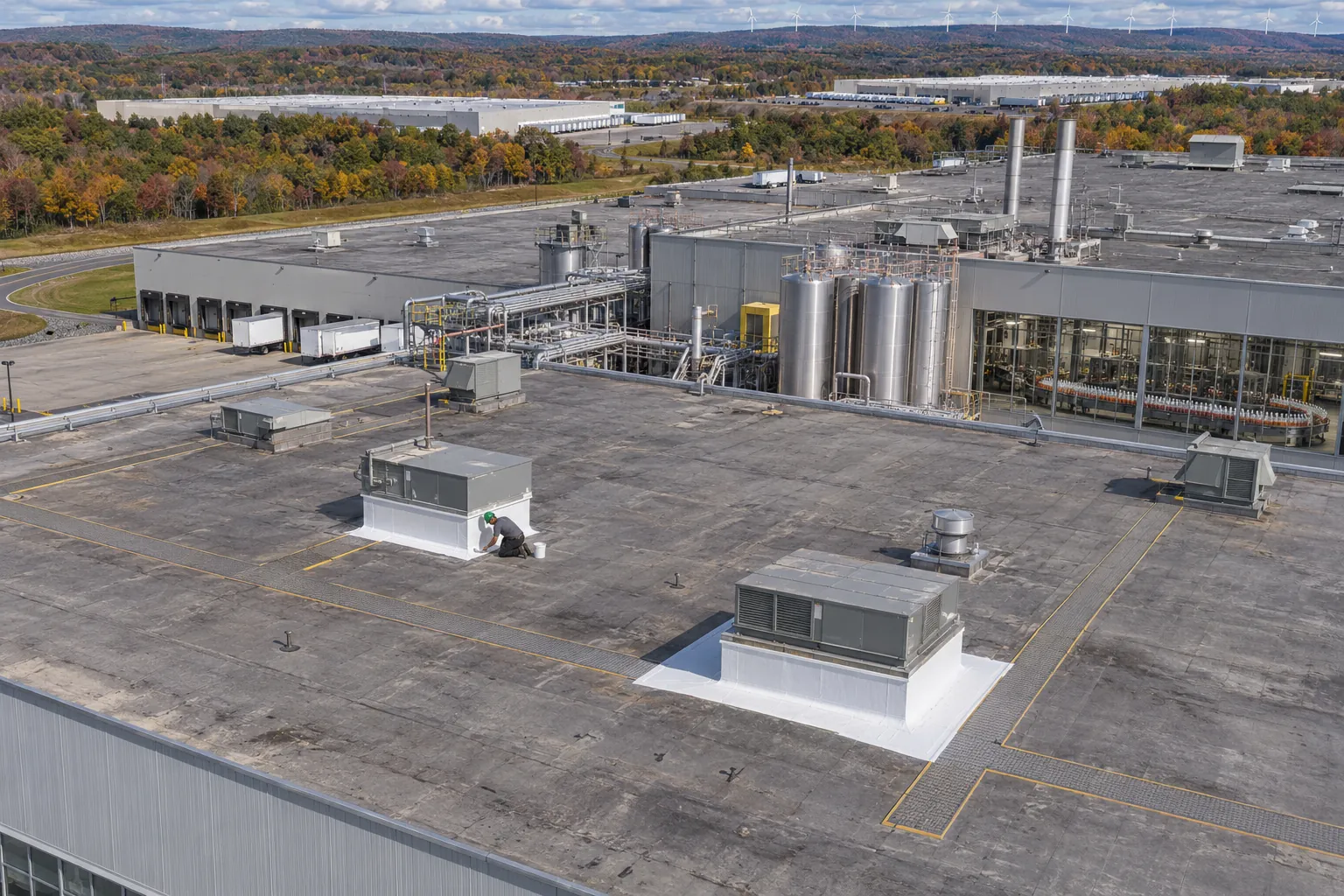
Full-roof plans for distribution centers with rooftop units, roof hatches, and daily service visits.
Industrial Roofing in Hazleton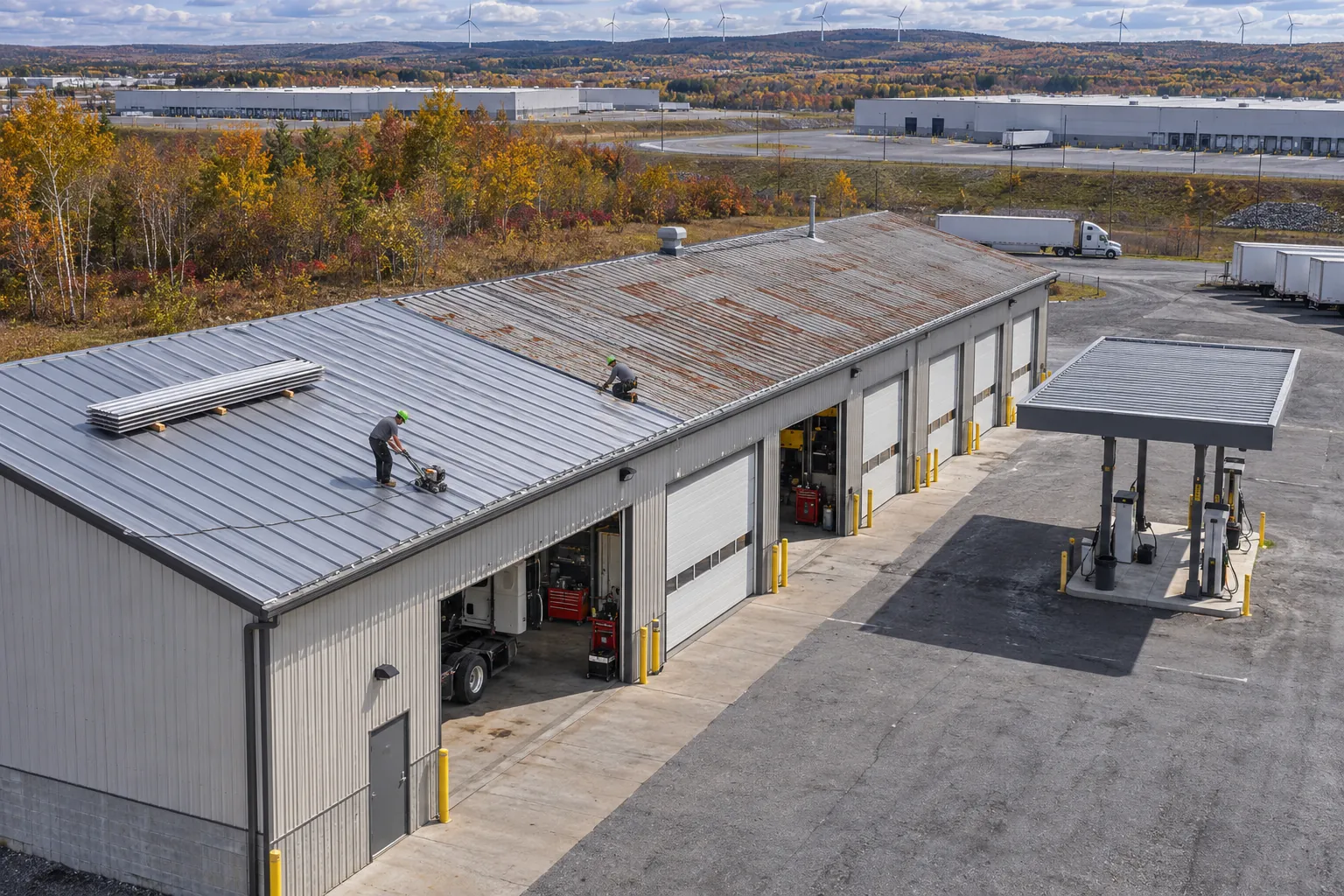
Steel panels for pitched truck shops and canopies on the same lot as the main warehouse.
Commercial Metal Roofing in HazletonCall and tell us which aisle or rack is getting water. We will trace the leak from the seams and drains above it.
Six steps keep a warehouse reroof moving while trucks keep moving too.
Dock doors, truck routes, and racking zones are drawn onto the roof plan so every section ties to the doors below it.
Seams, drains, and edges are checked, and core cuts show where insulation above the racks has stayed wet.
Your shipping lead signs off on which doors close each week, and staging moves to the quiet side of the building.
Old layers come off, new insulation and membrane go down, and the section is sealed before the crew climbs down.
Drains are cleaned, edge metal is checked along the dock wall, and photos of each section go to your file.
Large warehouse roofs collect leaves and grit at the same drains every fall. We mark those outlets and suggest when your staff or a roofer should clear them.
We also roof commercial buildings in these towns. Somewhere else nearby? Call us or send us a message.
Docks, cost, and getting started on a warehouse roof.
Question about your own roof?
Call UsOften, yes. When staging and overhead work can be separated from deliveries, some docks stay open. We match the dock schedule to roof access and material moves, mark exclusion areas, and talk with your team daily so trucks never end up under active work.
Roof area, the number of old layers, wet insulation, drain and edge work, and how many dock days have to be protected all show up in the price. We give a written number after inspecting the roof and the dock plan.
Yes. Offices, retail buildings, shops, and light industrial roofs get the same inspection-first approach, with the work order shaped around how that building runs.
Call or send a message with the building address and what you see inside. We schedule a walk of the roof and the rooms under it, then send a written scope.
Cold weather slows adhesives and limits some work, so many full replacements happen from spring through fall. Smaller sections and repairs can still be closed in winter when the deck is dry and each day is sealed.
Timing depends on roof size, the number of old layers, and how many dock days the section plan protects. We set a section calendar with your shipping lead before the first tear-off, so you know which week each part of the roof gets done.
Send your dock schedule and the leaks you have seen. We will inspect the roof and plan a replacement that keeps trucks moving.