Fasteners
Backed-Out Screws and Washers
Thermal movement loosens exposed screws and cracks their washers, opening a small hole at every rib fastener.
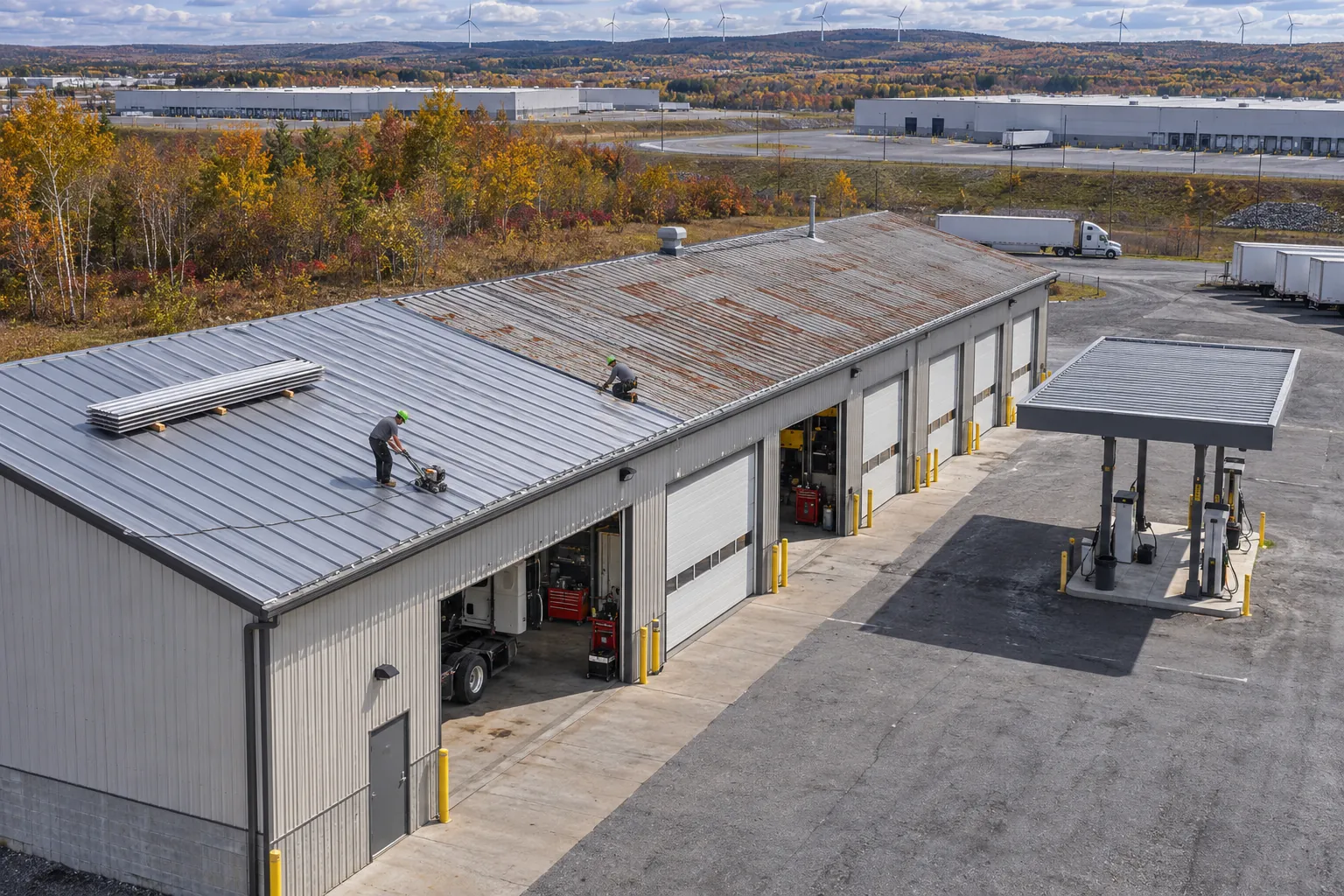
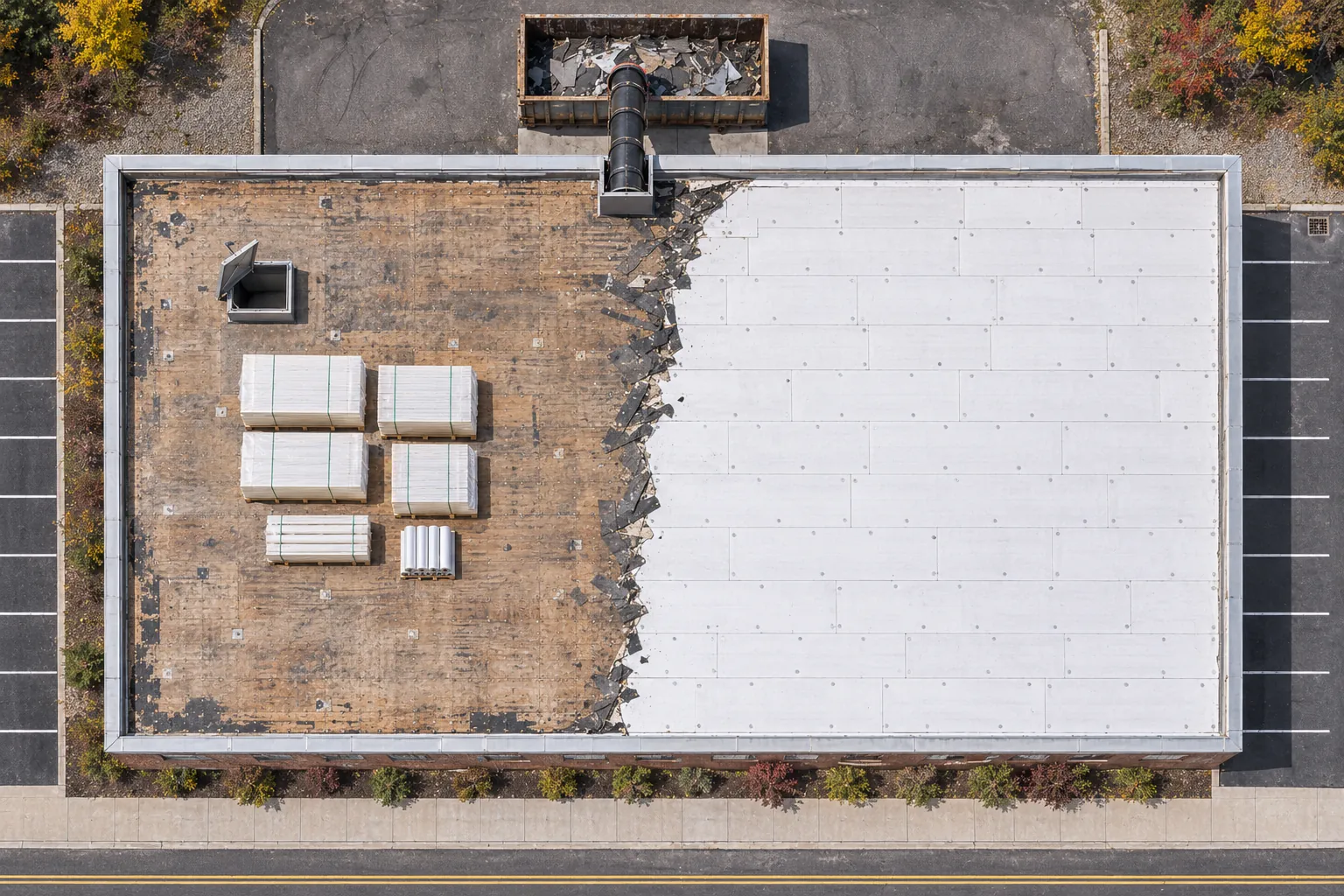
As a Hazleton commercial metal roofing contractor, we install standing-seam and exposed-fastener panels on shops, garages, and steel buildings, new or over old roofs.
Hazleton commercial metal roofing suits pitched roofs and many low-slope steel buildings. Framing, drainage, and the old roof decide which panel and method work.
| Your Building | Standing Seam Panels | Exposed-Fastener Panels | Membrane Instead |
|---|---|---|---|
| Pitched steel shop with rusted ribbed panels | Usually fits | Usually fits | Rarely |
| Nearly flat roof that holds water | Sometimes | Rarely | Usually fits |
| Old roof staying in place under new panels | Usually fits | Sometimes | Sometimes |
| Humid work area below the roof | Usually fits | Sometimes | Sometimes |
| Many added exhaust openings | Sometimes | Sometimes | Usually fits |
Retrofit framing and condensation control are checked before any panel recommendation.
Steel roofs fail at the same few places. These are the conditions we look for before deciding on repair or new panels.
Thermal movement loosens exposed screws and cracks their washers, opening a small hole at every rib fastener.
Moisture held at panel laps and lower edges rusts through first, often hidden under trim or snow guards.
Openings cut after the roof went on are often sealed with caulk alone, which cracks as panels expand and contract.
Warm, damp air meeting cold panels leaves water on the underside that looks like a roof leak in humid work areas.
Heavy slides off steel panels pile up at doorways and crush gutters or the membrane on lower roofs below.
Wind works trim loose at the ridge and eave, and blown snow then drifts under it into the building.
Panel type, attachment, and what happens to the old roof change the cost and the upkeep that follows.
Standing seam hides its clips under raised seams; exposed-fastener panels screw through the face. Each has its own upkeep at seams, clips, or washers.
New panels on a framing system over the old roof avoid a tear-off when the old roof is dry and the structure checks out.
Barns, equipment sheds, and processing buildings get panels plus insulation and ventilation for humid spaces below.
Equipment openings get factory curbs or welded collars tied into the panels, sized for how steel moves with temperature.
New steel panels change upkeep for owners, managers, and the crews working inside.
Call and tell us where water lands inside the shop. We will check the fasteners, laps, and openings above and tell you whether it is a leak or condensation.
Six steps take a steel roof from inspection to finished trim.
We check fasteners, laps, rust, and the purlins underneath, and look for condensation marks that separate humid-air drips from true leaks.
Standing seam or exposed fastener, tear-off or retrofit: the choice follows the framing, slope, drainage, and how the building is used.
Damaged purlins are repaired, retrofit framing is set over the old roof, and insulation and vapor control go in where humid air needs managing.
Panels are set square to the eave and fastened or clipped in sequence. Seams are closed and every opening gets a curb or collar tied into the steel.
Ridge, eave, and rake trim go on last. We walk every opening and seam before the lift comes down and the work area reopens.
Screws, clips, and openings to check each spring and after heavy snow go on a short list, so small problems get caught while they are still small.
Many shops pair a pitched metal roof with a flat section. These systems cover that part.
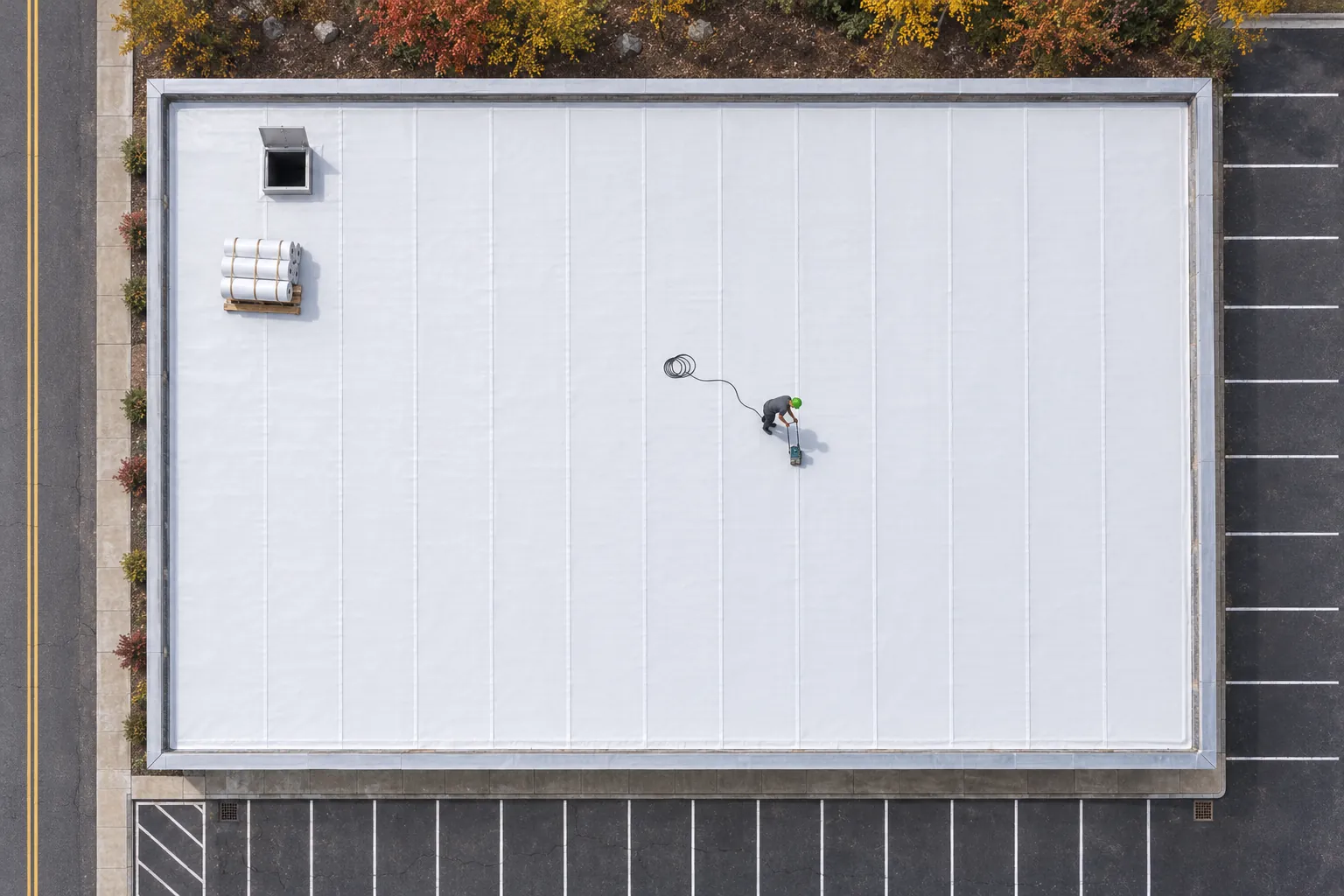
White welded membrane for flat office wings and low-slope additions beside a metal shop.
TPO Roofing in Hazleton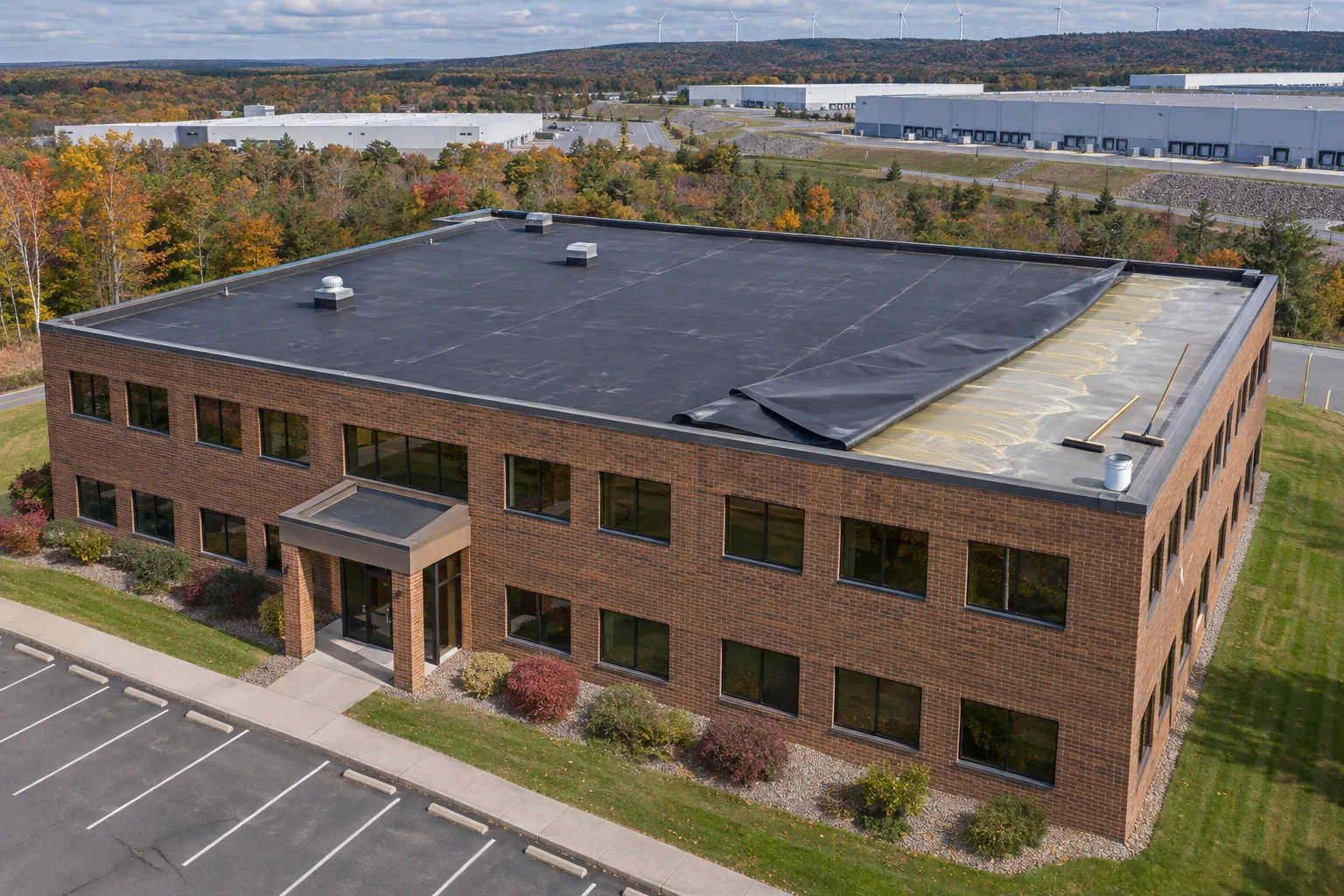
Rubber sheet for low-slope sections where taped seams and flexible flashing suit the walls.
EPDM Roofing in Hazleton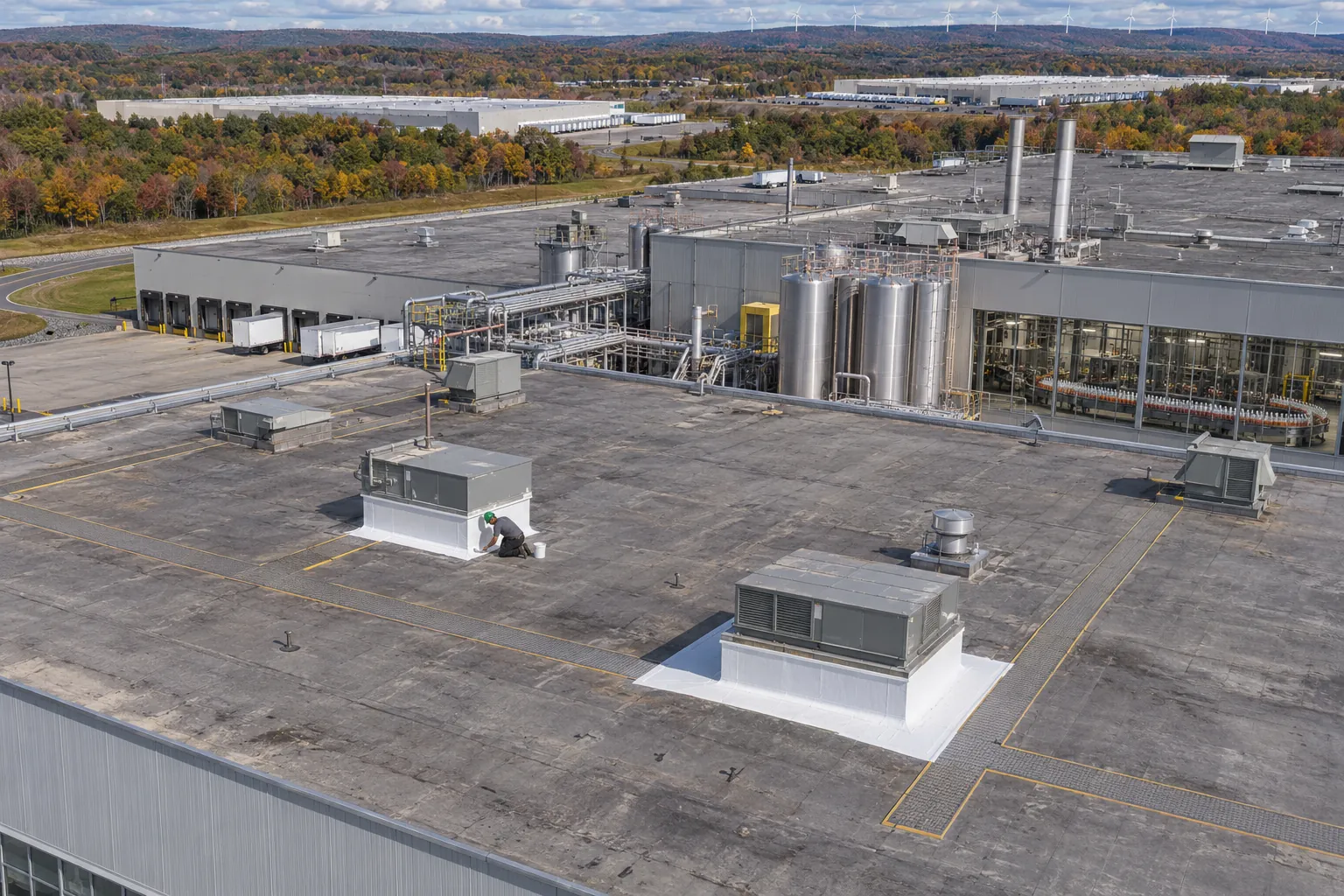
Full plant roof planning when a metal building sits among flat production roofs and heavy equipment.
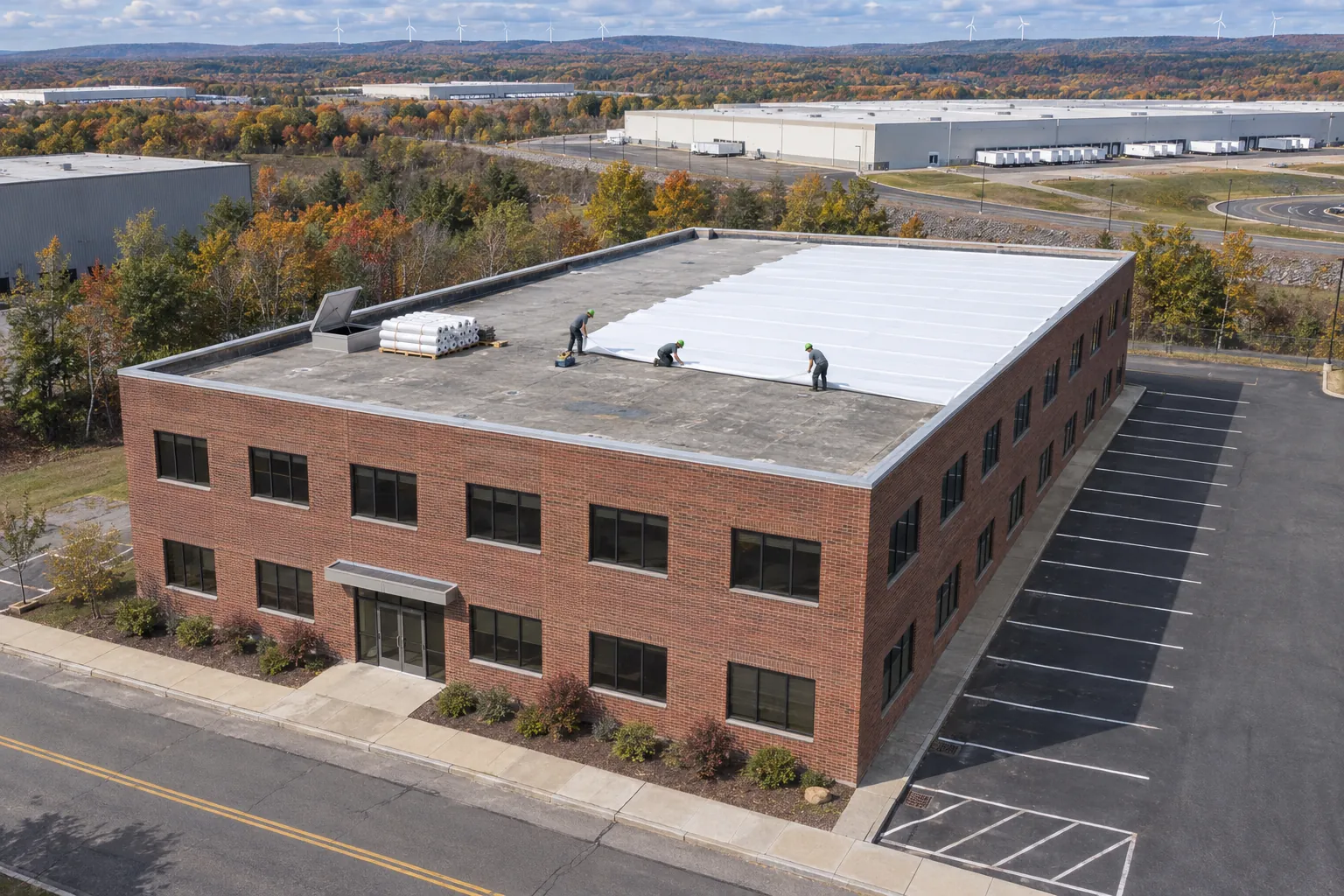
Industrial Roofing in HazletonOpenings, panel types, humid buildings, and roofing over an old roof.
Question about your own roof?
Call UsOpenings cut after installation are often sealed with surface caulk and no real curb. As panels expand and contract, that caulk cracks, so we install a proper curb or collar tied into the panels and the drainage path around it.
Exposed-fastener roofs need screws and washers checked and replaced over time. Standing seam roofs hide their clips, so the seams, clips, and flashing get the attention. Openings and edges matter on both.
Yes, once indoor moisture is handled. Insulation, ventilation, and air movement keep condensation off the panel underside, and fasteners and panels are chosen for the cleaning, storage, and daily operations underneath.
Wet old materials, weak support, or unsolved drainage can rule out a retrofit. We open the old roof and check how new framing would attach, and we plan curb and edge heights for the added thickness.
Panel gauge, coating, fastener type, ventilation, and upkeep decide service life. Roofs with tight fasteners, real curbs at openings, and controlled condensation stay in service far longer than ones patched with caulk.
Panels shed snow quickly, which can bury doorways, walkways, or a lower roof. Snow guards over entrances and above lower roofs hold it in place to melt, and their attachment has to suit the panel type so it does not open new leaks.
Tell us about the building, its panels, and where water shows up inside. We will inspect the roof and price new panels or a retrofit.